Why Does My Concealer Crease Within Hours—And How to Stop It

You're sitting in your car, checking your reflection before a meeting. This morning, your under-eye area looked smooth—bright, even. Now there's a fine line collecting product like a tiny trench, and the inner corners have gone patchy. The concealer you applied three hours ago has betrayed you. Again.
Creasing isn't just about the product you bought. It's about timing, texture, technique, and the specific architecture of your face. Some people's eyes are simply more expressive—more blinking, more squinting, more movement—and that activity breaks down makeup faster. But that doesn't mean you're stuck with visible lines. You can work with your skin instead of against it.
Why does concealer settle into fine lines?
The skin around your eyes is thin—about 0.5 millimeters thick compared to the 2 millimeters on your cheeks. It moves constantly. Every blink, every expression, every time you rub tiredness from your eyes, that skin folds and refolds. When you layer a pigmented product on top without proper preparation, the product has nowhere to go except into those expression lines.
Then there's the oil factor. Your eyelids and under-eye area produce sebum (yes, even if the rest of your face feels dry). As oil mixes with cream or liquid concealer, the formula breaks down and migrates. Powder concealers face the opposite problem—they can be too drying, creating a cakey texture that emphasizes texture rather than hiding it.
The products themselves aren't always innocent either. Heavy, full-coverage formulas often contain more pigment and less flexibility. They're designed to cover tattoos and discoloration—which sounds great in theory, but your under-eye skin isn't a flat canvas. It's living tissue that needs to breathe and move.
What's the right way to prep skin before concealer?
Preparation isn't about piling on more product—it's about creating the right surface. Start with clean, slightly damp skin. If you've just washed your face, wait about five minutes before applying anything. Skin that's too wet will reject concealer; skin that's bone dry will drink it in and hold it in lines.
A lightweight eye cream applied sparingly is non-negotiable—but here's where people go wrong. They use too much, or they don't wait long enough. You need a rice-grain amount for both eyes, patted (not rubbed) until it feels almost absorbed. Then wait. Two minutes minimum. Three is better. The cream needs to sink in and create a hydrated, slightly tacky base—not a slippery slide.
If your under-eye area tends toward oiliness, consider a tiny amount of mattifying primer right where you crease most. Not all over—just the specific spot. Think of it like spot-treating your makeup base. For dry under-eyes, a dab of facial oil pressed in the night before can help balance hydration levels so you're not starting from a deficit.
Some makeup artists swear by color-correcting before concealer—using peach or orange tones to neutralize darkness, then applying a thinner layer of skin-toned product on top. This actually reduces the total amount of concealer you need, which means less product available to crease. Sephora's concealer guide has excellent visuals for this technique if you're new to color theory.
How much concealer should you actually use?
Most people use three times what they need. That wand applicator? It's loading on product designed for heavy coverage—think stage makeup, photography, covering bruises. Your dark circles probably don't need that level of intervention.
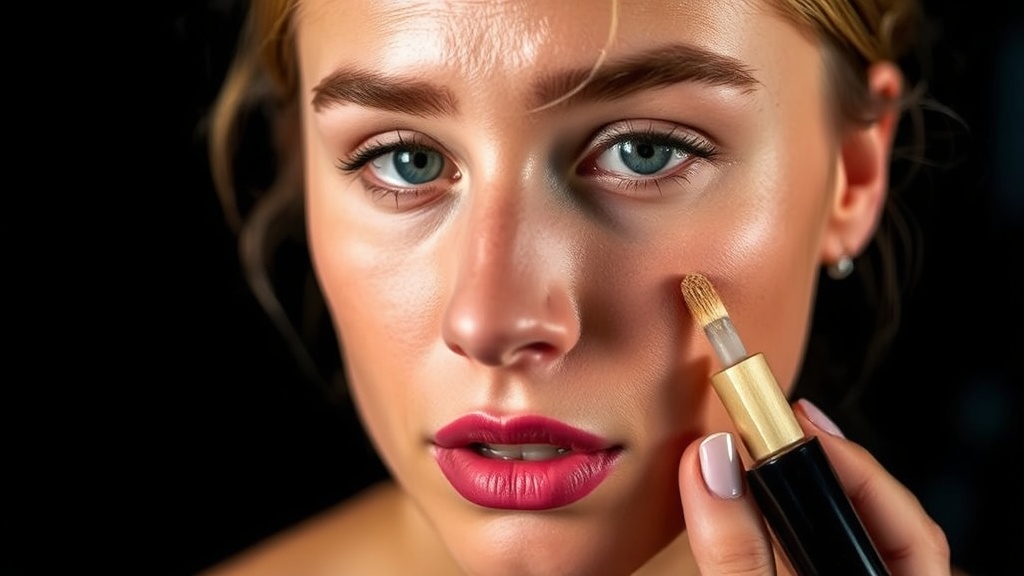
Try this: Dot three tiny spots under each eye with the applicator. One at the inner corner where darkness is usually deepest. One at the outer corner where skin can look shadowed. One in the middle. That's it. Blend with a damp sponge or your ring finger—never rub, just press and roll. The warmth of your finger helps the product melt into skin, but a sponge gives a more airbrushed finish.
If you can still see darkness after blending, add one more tiny dot only where needed. Building in thin layers beats slapping on one thick coat. Thick concealer doesn't just crease—it catches light strangely, creating a reverse-raccoon effect where your under-eyes look lighter than the rest of your face.
Let each layer sit for thirty seconds before deciding if you need more. Some concealers oxidize slightly (darken as they dry), and what looks insufficient when wet might be perfect once set.
Should you set concealer with powder—and how?
Powder is where good concealer jobs go to die—or become immortal. The difference is quantity and timing. Immediately after blending, while the concealer still has a slight dewiness, press a tiny amount of finely-milled translucent powder into the area. Don't sweep—pressing sets without disturbing the product underneath.
The "baking" technique (applying heavy powder and letting it sit) works for photography and stage makeup because those situations require longevity under hot lights. For real life, it's usually overkill and creates that dry, cracked appearance that ages the eye area. Unless you're being filmed in 4K, skip the heavy powder layer.
If you're over thirty, consider skipping powder altogether on some days. Modern long-wear concealers are formulated to set themselves. A light dusting of setting spray from a distance can provide hold without the drying effect of powder. Or try a hybrid approach: powder only the outer corners where creasing is most likely, leaving the inner eye area more natural.
For those with mature skin, the Allure guide to creaseless concealer application recommends cream-to-powder formulas that set without additional products—worth exploring if traditional powders feel too heavy.
Which concealer formulas actually resist creasing?
Not all concealers are created equal for the under-eye zone. What covers a blemish on your chin might turn traitor beneath your eyes. Generally, lightweight liquid formulas with a satin or natural finish outperform thick creams for crease resistance. They move with your skin instead of fighting it.
Look for words like "hydrating," "serum-infused," or "flexible" on the packaging. Avoid anything labeled "maximum coverage" or "tattoo cover" for daily under-eye use—save those for actual blemishes or special events where you'll be photographed, not making expressions all day.
Silicone-based formulas often crease less because they create a flexible film, but they can pill if layered over incompatible skincare. Water-based concealers play nicer with most skincare but might need more frequent touch-ups. If you're unsure which camp a product falls into, check the first few ingredients—silicones usually show up as words ending in "-cone" or "-siloxane."
Don't forget to consider your climate. Humidity calls for more tenacious, long-wear formulas. Dry winter air might mean switching to a more emollient concealer and easing up on powder. Your perfect concealer in August could be a disaster by January.
One final consideration: your concealer and foundation need to get along. If you're using a silicone-based foundation, a water-based concealer might separate and settle strangely. Match your bases when possible. Glossier's makeup artists recommend staying within the same product family when building a base routine.
Creasing concealer isn't a flaw in your skin—it's feedback from your products and technique. The eye area is the most expressive part of your face; it deserves a approach that respects its movement. Start with less, wait between layers, set strategically, and choose formulas designed for flexibility. Your concealer should make you look like you slept eight hours—not like you're wearing a mask that cracked by lunch.